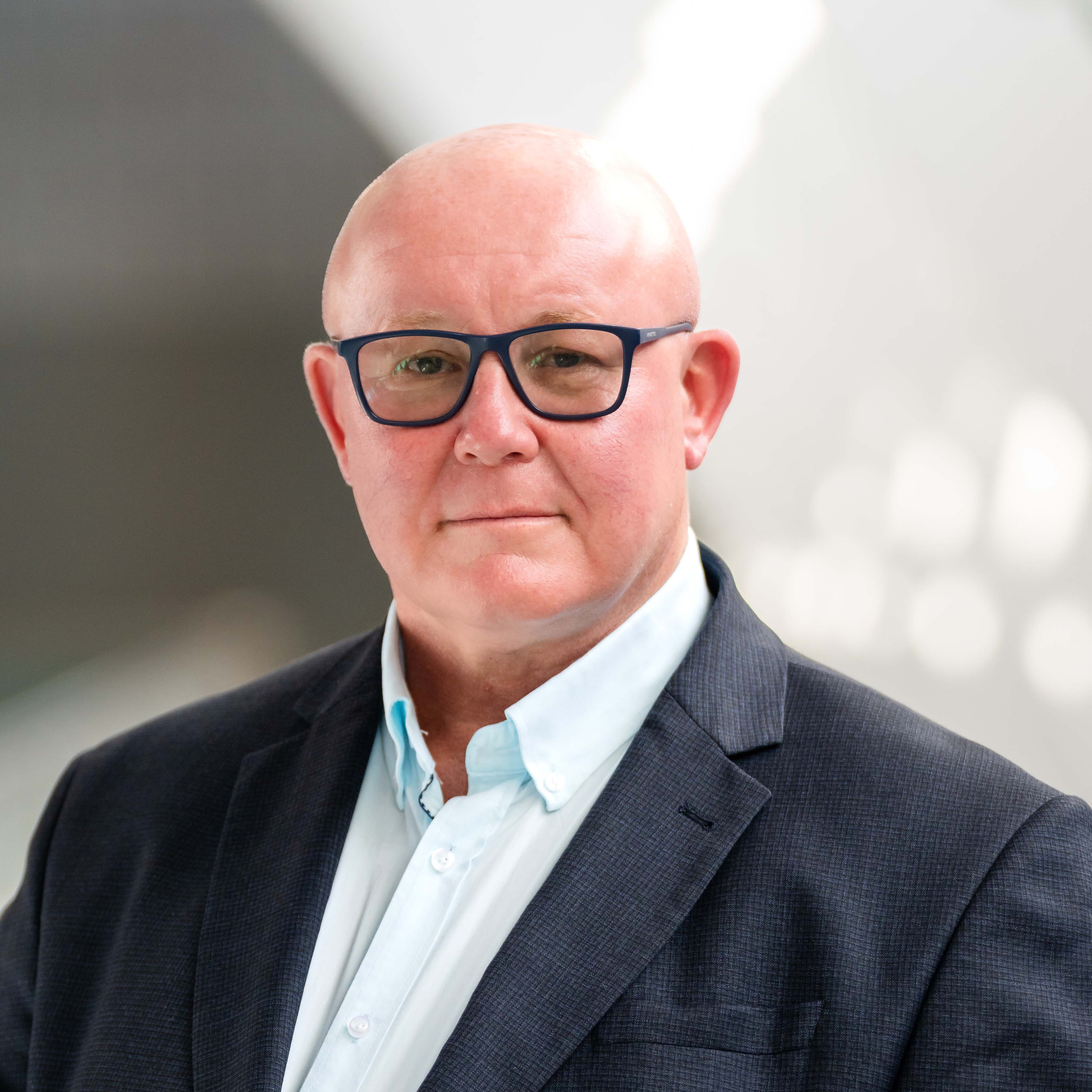
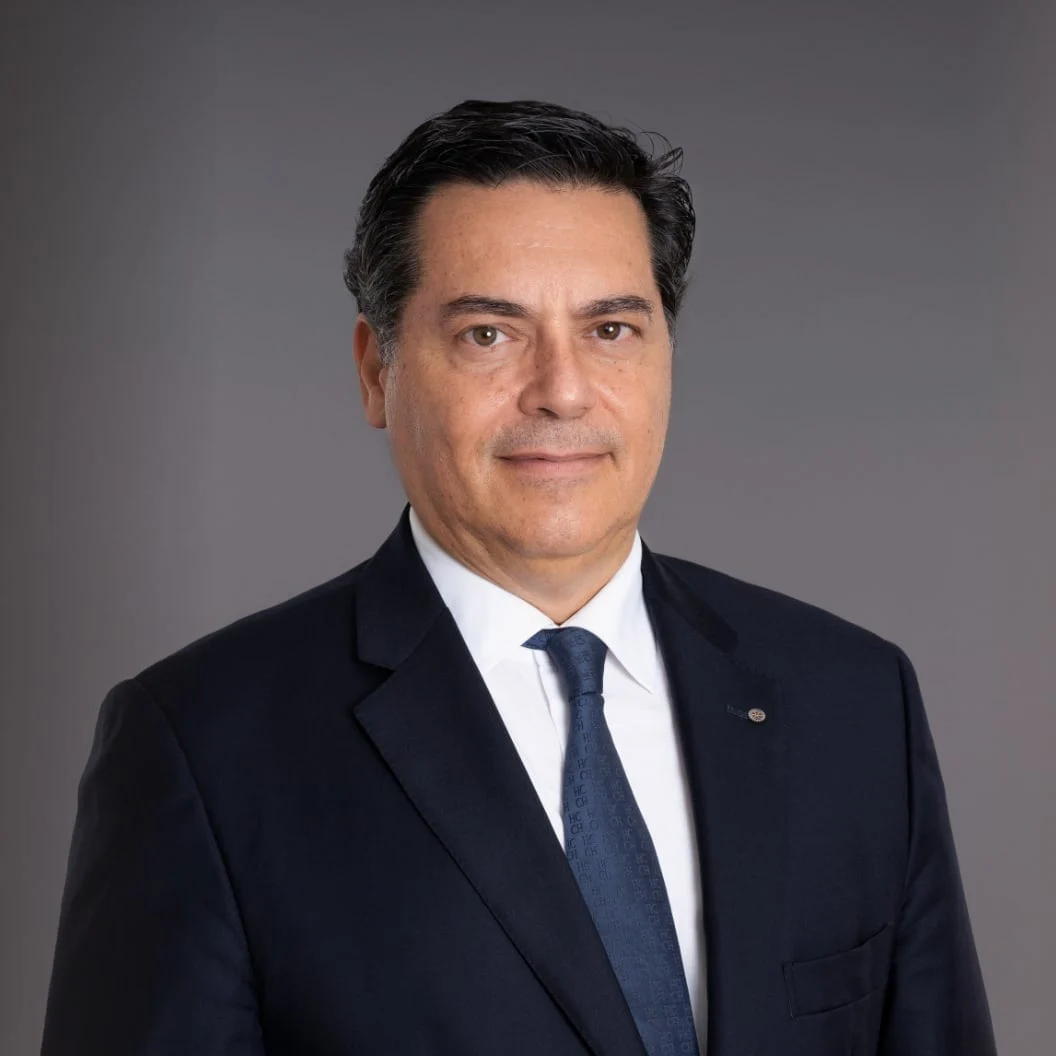
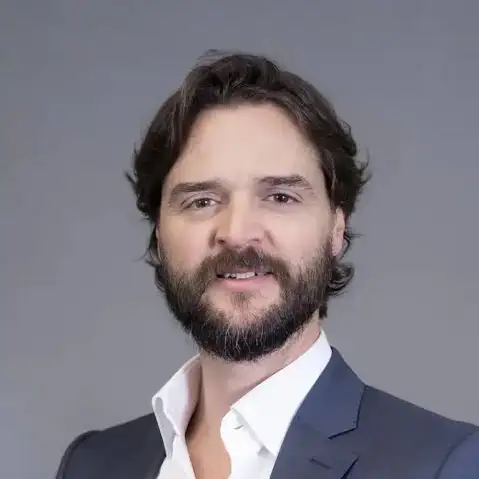
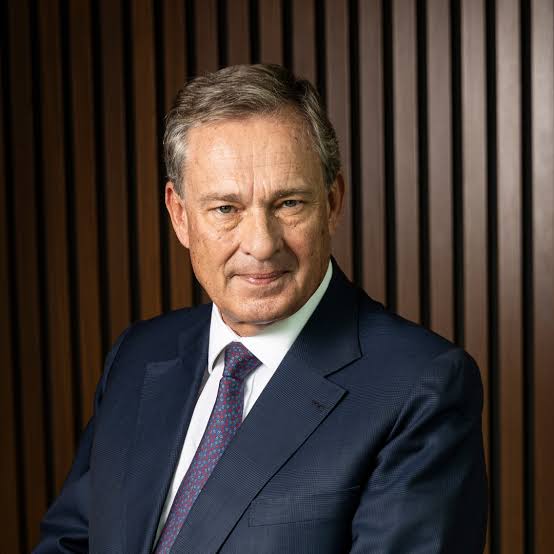
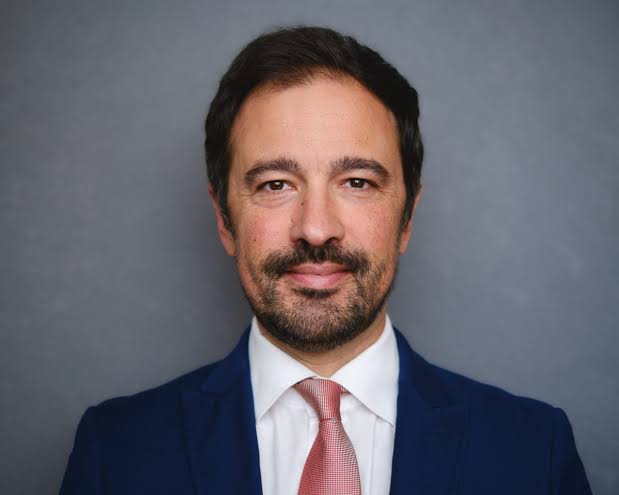
Rogério Fernandes Ferreira, founder and managing partner of RFF, a former Secretary of State for Fiscal Affairs, argued that Fitch’s A+ upgrade is welcome but that what investors really prize is tax stability and predictable rules, and that Portugal’s policies are too often communicated abroad through headlines rather than facts.
The experts shared that view and agreed on three more. The next wave of capital must come from private investment and public-private partnerships at local level rather than from Brussels, with EU recovery funding tapering. Slow licensing, permitting and administration remain the single biggest deterrent to investment, and digitalising public services is the fix. And quality of life, safety and talent are economic factors in their own right, because investors now choose where they want to live first and invest second.
On cross-border structuring, Chris Marson, head of private wealth at Portugal Pathways, Miguel Cardiga, tax partner at BDO, Mafalda Cesário, head of tax and legal at Utmost Group and Henrique Peyssonneau Nunes, partner at CMS Law agreed that families must ask the right questions from day one and take holistic, multidisciplinary advice, because tax, immigration and succession mistakes are hard to unwind. Cesário explained that Portuguese law governs succession by default unless a will states otherwise, that forced heirship reserves shares for spouses and children, and that with trusts unrecognised in Portugal, unit-linked life policies have become a popular tool for nominating beneficiaries. She also warned that Portugal fails to tell its own citizens abroad that its special tax regimes apply to them, feeding a brain drain. Nunes advised patience with immigration timelines and suggested Golden Visa capital be channelled into affordable housing, education and healthcare.
On what is driving Portugal’s future, Rajan Sahay, chairman of Obrana, president of the Portuguese Indian Chamber of Commerce, argued that SMEs make up 99% of Portuguese companies yet receive a fraction of recovery funding, and that a sovereign rating means little to a developer whose project lives or dies on a municipal permit or an environmental agency decision.
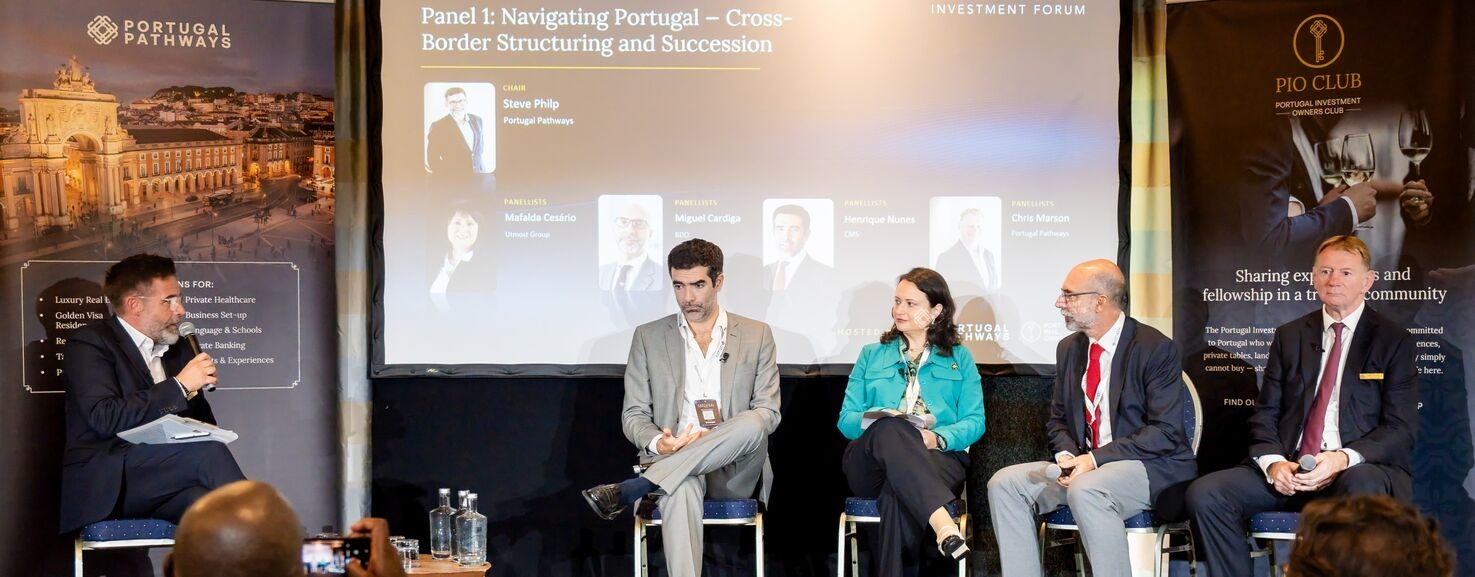
André de Almeida Santos, partner at Indico Capital said public money should crowd in international capital through risk mitigation and make Portugal an investable country, as Autoeuropa and Microsoft have shown. Ricardo Assunção of Amorim Luxury Group said liquidity exists but a clearer framework is needed to cut bureaucracy for long-term projects such as Comporta, and that safety and quality of life should be marketed as brand equity. Sahay warned against leaving the real economy outside the investment hubs behind.
On the metrics for the next 10 years, Peter Villax, CEO of Mediceus and Biovance, argued that Portuguese productivity sits 17% below the OECD average, that the gap lies in management rather than workers, who rank among Europe’s most productive when they go abroad, and that solutions such as digitalised public services already exist elsewhere and simply need implementing. Villax described how his family came to Portugal and built one of its most successful companies, and said bureaucracy must be simplified without reducing regulation, as the technology is there and only the will needs to follow. He added that Portugal needs someone to tell its story internationally, and that world-class events such as the Portugal Investment Forum will be essential to telling it and to bringing people together with action and intent.
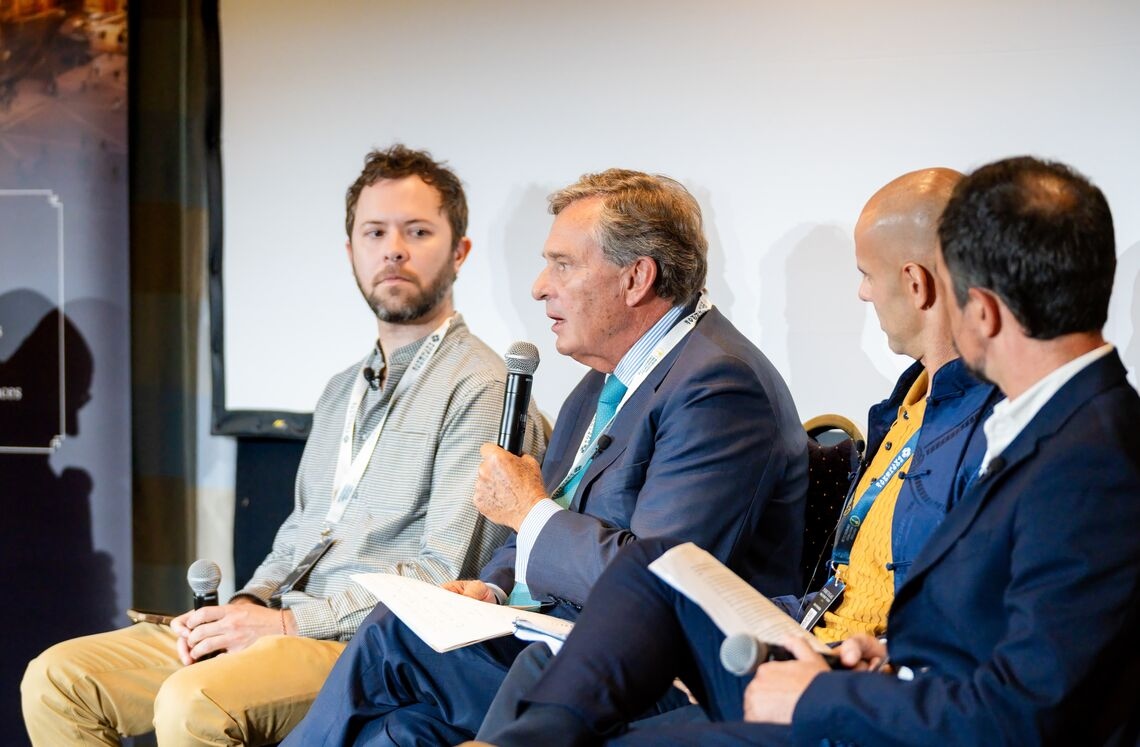
Tyler Gordon, founder of Tejomed, pointed to an ageing population and private healthcare sales up 44% since Covid as the case for life sciences, alongside clean energy and the marine economy. João Gonçalves of SBPS described the Golden Visa’s shift from property into private equity and specialised funds, and the growing role of the D3, Tech, Startup and Digital Nomad visas in attracting talent. André Rosendo of Vermilion Group argued that to retain the people it attracts, Portugal must move beyond physical and financial security to offer health and educational security, and that automating public services would improve transparency and reduce corruption.
Rogério Fernandes Ferreira highlighted how Portugal's geographic location has always been an advantage as we are the closest point to the America's, Africa and Europe. In uncertain times, when people are looking for mobility, safety and security, this is a major advantage.
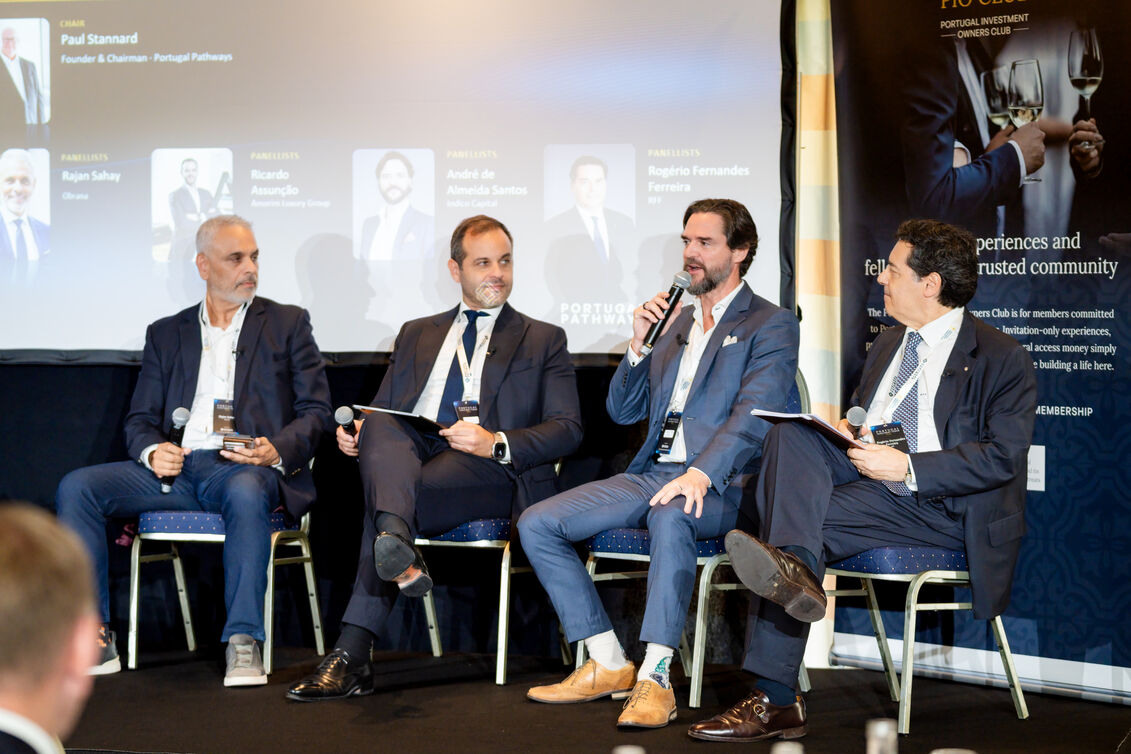
The expert panellists and speakers in Lisbon included a former Secretary of State for Fiscal Affairs, a board member of Portugal’s most prestigious luxury group and brand, a Portuguese fashion entrepreneur, a venture capital firm, a private banker, property developers, tax, immigration and private-client lawyers, a global life insurance group, a biotech entrepreneur, healthcare and technology founders and wealth management advisers.
The Portugal Investment Forum was organised and hosted by Portugal Pathways and the Portugal Investment Owners Club.